
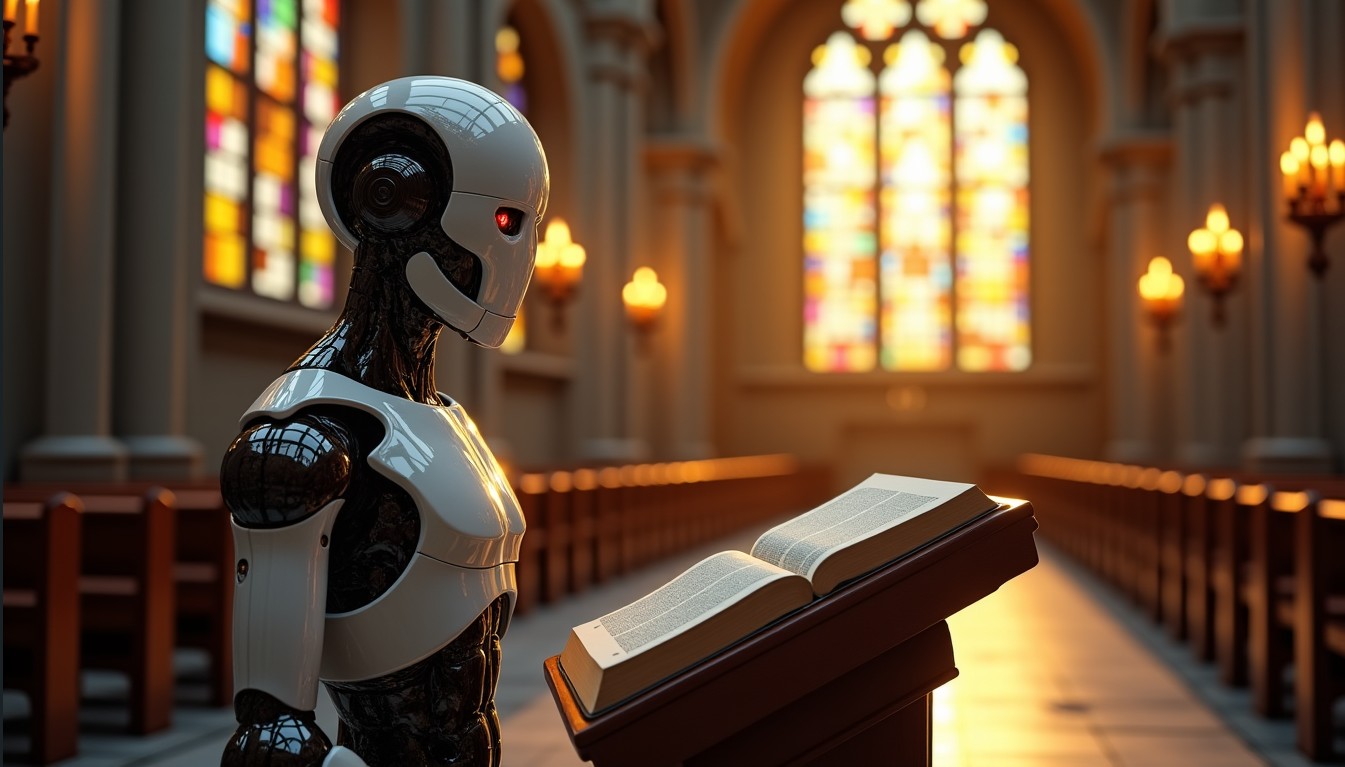
Tech companies, long perceived as skeptical of organized religion, are increasingly turning to faith leaders for guidance on shaping artificial intelligence. This marks a notable shift, as concerns about AI’s rapid integration into society grow. The question of whether a religion partner fine-tuned for ethical considerations can truly integrate with AI development is at the forefront of this evolving dialogue, moving beyond initial hesitations to explore profound collaborations.
This surprising turn reflects a recognition that faith traditions possess millennia of wisdom regarding ethics, human purpose, and societal well-being. Leaders from various religious groups have begun meeting with representatives from major AI companies, signaling a serious commitment to infusing moral and spiritual considerations into the technological frontier. These discussions aim to ensure that AI development progresses in a manner that truly benefits humanity.
The core challenge lies in bridging the perceived gap between spiritual wisdom and technological advancement. By engaging with diverse religious perspectives, AI developers hope to create more robust, inclusive, and ethically sound artificial intelligence systems that reflect a broader understanding of human values.
The emerging dialogue between faith and artificial intelligence
The conversation between the tech world and religious institutions is no longer a fringe idea; it is becoming a structured and significant exchange. Historically, Silicon Valley often operated with a secular ethos, but the accelerating pace of AI development has prompted a re-evaluation of this stance. The complexities of AI’s societal impact, from algorithmic bias to existential questions, demand a multifaceted approach that extends beyond purely technical or philosophical frameworks.
One pivotal example of this engagement is the “Faith-AI Covenant” roundtable, where leaders from various religious groups convened with representatives from prominent AI companies. These gatherings provide a crucial platform for discussing how best to integrate ethical considerations rooted in faith traditions into the design and deployment of AI technologies. The goal is not to impose a single religious view, but to draw upon the collective ethical wisdom accumulated over centuries.
We are witnessing a proactive effort to prevent potential pitfalls and to steer AI towards outcomes that promote human flourishing. This collaborative spirit acknowledges that technology, while powerful, is ultimately a tool that must serve humanity’s highest aspirations. The inclusion of faith leaders helps ensure that these aspirations remain central to the development process.
Why faith leaders are joining the AI ethics conversation
The decision by AI developers to seek input from faith leaders stems from a growing awareness of the limitations of purely secular ethical frameworks when addressing the profound implications of artificial intelligence. Religious traditions offer a rich tapestry of moral principles, communal values, and understandings of justice and compassion that can provide invaluable guidance.
One primary reason for this collaboration is the need to address inherent biases. Studies have indicated that AI models, when asked about ethical or existential concerns such as how to sustain a marriage or find happiness, can largely omit religious perspectives. This oversight means that AI systems might not fully grasp the diverse ways humans find meaning and make moral decisions, potentially leading to systems that are incomplete or even alienating to a significant portion of the global population. A thoughtful approach to this partnership can make an AI an effective virtualaipartner.com for ethical deliberation.
Furthermore, faith traditions often grapple with questions of purpose, consciousness, and what it means to be human—topics that become increasingly relevant as AI advances. Their perspectives can help define the boundaries of AI’s role in society, ensuring that technology remains a servant and not a master. By engaging with these deep-seated human concerns, the partnership aims to build AI that is not only intelligent but also wise and humane.
“The wisdom of the world’s religions offers an invaluable resource for navigating the complex ethical landscape of artificial intelligence. It helps us remember that technology’s ultimate purpose is to serve humanity’s well-being, not merely its efficiency.”

Bridging the gap: how faith traditions inform AI development
Integrating religious wisdom into AI development is a nuanced process that goes beyond simple moral pronouncements. It involves translating core tenets and ethical frameworks into practical guidelines for technologists. This endeavor requires careful dialogue and mutual understanding between different disciplines.
For instance, the emphasis on compassion in Buddhism can inform how AI systems are designed to interact with users, promoting empathy and understanding rather than cold logic. Islamic principles of justice and community welfare can guide the development of AI that promotes equitable access to resources and fair decision-making. Similarly, Jewish traditions emphasize the sanctity of life and the importance of covenant, which can contribute to discussions on AI’s impact on human dignity and societal trust. Christian ethics, often centered on love and the inherent value of every individual, offer a strong foundation for developing AI that respects human rights and fosters genuine connection.
Organizations like “AI and Faith” exemplify this bridge-building, bringing together experts from various religious backgrounds to contribute to the AI ethics conversation. They work on projects ranging from addressing misinformation to exploring hopeful future scenarios where AI serves humanity ethically. This multi-faith, multi-disciplinary approach is essential for creating AI that truly understands and respects the diversity of human experience.
Here is a brief overview of how different faith traditions can uniquely contribute to AI ethics:
| Faith Tradition | Core Ethical Contributions to AI | Potential Impact on AI Development |
|---|---|---|
| Buddhism | Compassion, non-harm, mindfulness, interconnectedness | Designing AI for well-being, reducing algorithmic harm, fostering ethical user interaction. |
| Islam | Justice, equity, community (Ummah), stewardship (Khalifa) | Ensuring fair resource distribution, combating bias, promoting societal harmony and accountability. |
| Judaism | Covenant, law (Halakha), human dignity, community responsibility | Establishing clear ethical guidelines, protecting individual rights, fostering trust in AI systems. |
| Christianity | Love (Agape), human dignity, forgiveness, service to others | Developing AI that prioritizes human value, promotes empathy, supports vulnerable populations. |
| Hinduism | Dharma (righteous conduct), Karma, interconnectedness, non-violence (Ahimsa) | Promoting ethical behavior within AI systems, considering long-term societal impacts, fostering peaceful coexistence. |
Practical applications and collaborative initiatives
The collaboration between faith leaders and AI developers is moving beyond theoretical discussions into concrete actions. These initiatives aim to embed ethical considerations directly into the design, testing, and deployment phases of artificial intelligence. The goal is to develop AI that is not only technologically advanced but also morally informed and socially responsible.
One significant area of focus is the creation of joint programs that facilitate ongoing dialogue and shared learning. These programs often involve workshops, seminars, and research initiatives where theologians, ethicists, and AI engineers can exchange ideas and work together on specific challenges. For example, some partnerships are exploring how religious narratives can be used to teach AI about complex human values, or how AI can be leveraged to address global issues in ways that align with humanitarian and faith-based principles.
Strategic projects, such as “Faithful AI: Stories of Hope from 2045,” illustrate an effort to envision positive futures shaped by ethical AI. These projects encourage creative thinking about how AI can contribute to a more just and compassionate world, drawing inspiration from diverse spiritual traditions. They serve as blueprints for what a truly harmonious religion partner fine approach could achieve.
The sharing of content and resources is also a vital aspect of these collaborations. Organizations act as hubs, curating articles, podcasts, and research that highlight the intersection of AI and faith. This ensures that the conversation is accessible to a broader audience and that best practices are shared across different communities and development teams. Such collaborative ecosystems are crucial for advancing wise engagement with AI-powered technologies, ensuring that ethical considerations are not an afterthought but an integral part of the innovation process.
Specific topics where faith and AI collaboration can yield positive outcomes include:
- Developing ethical guidelines for autonomous systems.
- Addressing the existential questions posed by advanced AI.
- Fostering responsible innovation that benefits all segments of society.
- Mitigating algorithmic bias in areas like hiring, lending, and justice.
- Utilizing AI for humanitarian aid and social good initiatives.
- Combating the spread of misinformation and promoting truth.
- Exploring the implications of AI on human spirituality and meaning-making.

Addressing concerns and moving forward
While the partnership between religion and AI holds immense promise, it is not without its complexities. The diversity of religious beliefs and interpretations means that finding universal ethical principles requires careful navigation and a commitment to inclusivity. The challenge lies in drawing upon the richness of different traditions without allowing any single perspective to dominate or exclude others.
Ensuring that the dialogue is genuinely representative and avoids tokenism is paramount. This means actively seeking out voices from a wide array of faith backgrounds, including those from less represented communities. The goal is to build a consensus around shared human values that transcend specific doctrines, focusing on universal ethical principles that can guide AI development for the benefit of all humanity.
Another area of focus involves translating abstract ethical concepts into concrete, actionable parameters for AI design. This requires ongoing education and collaboration between ethicists, theologians, and engineers, fostering a common language and understanding. The aim is to create AI that is not only technically proficient but also deeply aligned with human values, promoting fairness, transparency, and accountability.
The journey towards ethically informed AI is an ongoing process of learning, adaptation, and continuous dialogue. It acknowledges that as AI evolves, so too will the ethical questions it raises, necessitating a flexible and responsive framework for guidance. This commitment to continuous engagement ensures that AI remains a tool that empowers humanity rather than diminishes it.
Envisioning a harmonious future for religion and AI
The collaboration between religious leaders and the artificial intelligence community represents a profound commitment to shaping technology in a way that respects and enhances human life. This partnership moves beyond simply addressing risks; it actively seeks to infuse AI with a deeper sense of purpose and ethical responsibility, ensuring that its development trajectory aligns with humanity’s highest aspirations.
By integrating diverse ethical frameworks from faith traditions, AI can be developed to be more inclusive, compassionate, and aligned with a broader understanding of human flourishing. This thoughtful approach ensures that a religion partner fine-tuned for wisdom can indeed contribute meaningfully to the creation of AI systems that serve all people, recognizing the vast spectrum of human values and beliefs.
The ongoing dialogue between these seemingly disparate fields promises a future where technological advancement is tempered by profound ethical reflection. It underscores the belief that true progress is not just about what technology can do, but about what it should do, guided by a shared vision of a just and humane world. This collaboration is set to enrich the ethical foundation of AI, fostering innovation that truly benefits global society.

Samuel Reed is a devoted Christian writer with 4 years of experience sharing Bible verses, blessings, and prayers on Beginingrace.com. His writings reflect faith, hope, and the peaceful message of God’s grace for every heart