
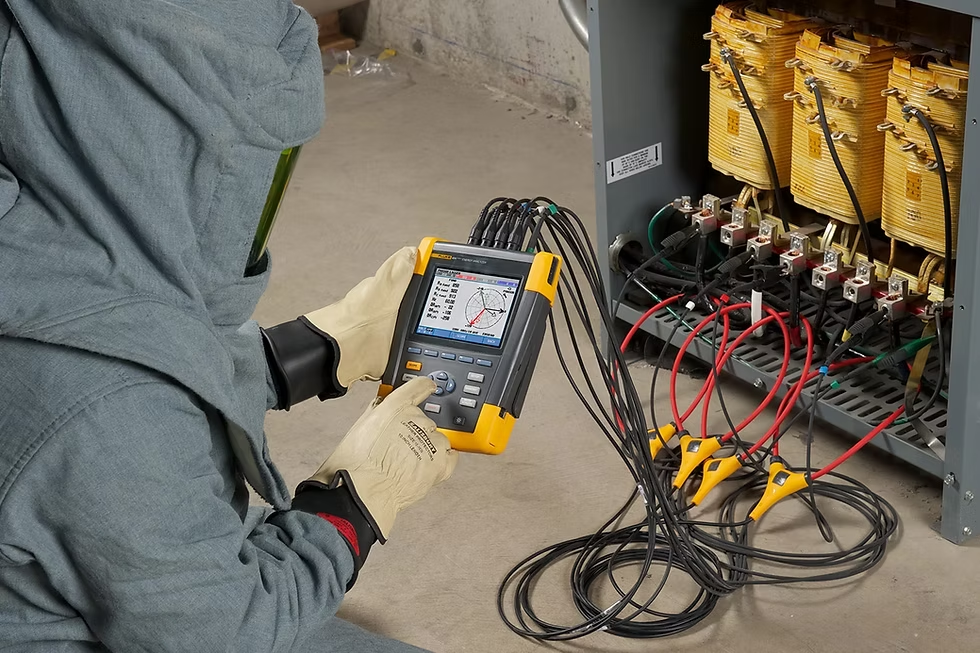
Reliable electrical systems depend on more than continuous power availability. Voltage variations, harmonics, transients, and phase imbalance can affect equipment performance before a visible failure occurs. These disturbances may reduce motor efficiency, disrupt automation systems, damage sensitive electronics, and increase maintenance demands.
Power quality monitoring gives engineering and facility teams a clearer view of electricity across the distribution network. Let’s further look at how power quality monitoring supports dependable equipment performance, efficient maintenance, and long-term electrical system reliability.
Detecting Electrical Disturbances Before They Cause Failures
Many electrical disturbances last only a fraction of a second, making them difficult to identify through routine inspections. A temporary voltage sag may reset controls, interrupt production, or affect communication equipment without leaving physical evidence.
Power quality monitoring records these events and provides time-stamped information for technical review. Engineers can compare disturbance patterns with equipment behavior, operating schedules, and load changes. This evidence helps separate electrical supply issues from equipment faults, reducing unnecessary component replacement and repeated troubleshooting.
Continuous visibility also helps facilities identify recurring conditions. Repeated voltage fluctuations may indicate unstable loads, weak connections, transformer concerns, or problems elsewhere in the distribution system. Early detection allows teams to act before the condition becomes more serious.
Supporting Reliable Operation of Sensitive Equipment
Modern facilities rely on variable frequency drives, programmable logic controllers, data systems, medical equipment, automation platforms, and electronic protection devices. These technologies improve control and productivity, but many remain sensitive to poor electrical conditions.
Harmonics can increase heat in cables, transformers, and motors. Voltage imbalance can place additional stress on three-phase equipment. Transients may damage electronic components, while frequency variations can affect timing-sensitive processes.
Through power quality monitoring, teams can understand which disturbances affect critical loads and how often they occur. This information supports better equipment protection, improved grounding, corrective filtering, load balancing, and suitable power conditioning measures.
Improving Maintenance and Troubleshooting Decisions
Electrical problems often create intermittent symptoms that are difficult to reproduce during a service visit. Without recorded system data, maintenance teams may rely on assumptions, operator reports, or repeated component changes.
Monitoring provides a factual history of electrical events. Teams can review waveforms, voltage trends, current behavior, harmonics, and event duration before deciding what action is required. This reduces diagnostic uncertainty and supports focused maintenance work.
It also improves coordination between facility teams, electrical contractors, equipment manufacturers, and utility providers. Each party can review the same event data, making technical discussions more precise and corrective action faster.
Controlling Lifecycle and Maintenance Costs
Unexpected electrical events can create costs beyond equipment repair. Production interruptions, data loss, emergency service calls, damaged materials, and premature asset replacement can increase the Total Cost of Ownership (TCO).
If you’re wondering, “Which power quality monitoring solutions are suitable for facilities that require reliable detection of electrical disturbances while controlling lifecycle and maintenance costs?”
The answer depends on the facility’s critical loads, distribution complexity, reporting needs, communication architecture, and maintenance resources. Suitable solutions should provide accurate event capture, useful trend analysis, accessible reporting, and practical integration with existing energy or building management systems.
Strengthening Long-term Electrical Reliability
Power quality monitoring helps facilities move from reactive repair toward evidence-based electrical management. It gives teams the information needed to detect disturbances, protect equipment, verify corrective actions, and plan maintenance with greater confidence.
Partnering with reputable electrical brands can also support appropriate transformer selection, dependable installation, and effective lifecycle management. By selecting monitoring tools that match operational needs, facilities can reduce avoidable disruptions, support asset performance, and manage electrical risks across the system lifecycle. The result is a more stable electrical environment that supports productivity, safety, and long-term continuity.

Samuel Reed is a devoted Christian writer with 4 years of experience sharing Bible verses, blessings, and prayers on Beginingrace.com. His writings reflect faith, hope, and the peaceful message of God’s grace for every heart