
Revelation 21 shows us a new heaven and a new earth. It gives hope to every believer. The chapter speaks about God’s final plan. It shows a future with no pain or sorrow. God promises to live with His people. This study helps us understand each verse clearly.
In this chapter, John sees a holy city coming from God. The New Jerusalem shines with God’s glory. It is a place prepared for His people. Every verse teaches us something important. We learn about God’s love and His perfect kingdom. This study will guide you step by step.
Revelation Chapter 21
Revelation 21:1-Setting
John witnesses the dramatic transition from the old order to the new, as the first heaven and earth pass away along with the sea. This passage marks the culmination of God’s redemptive plan, where the corruption and chaos represented by the sea, often symbolizing evil and separation in biblical literature, are no more. The vision reveals not merely a renovation of the existing creation but a complete renewal, emphasizing God’s power to make all things new. This setting establishes that God’s ultimate plan involves total transformation rather than partial restoration. The absence of the sea also suggests the removal of all barriers between nations and peoples, preparing us for the unified community described in the following verses. Remarkable Meaning
Revelation 21:2-First Glimpse of the New Jerusalem
The holy city descends from heaven like a bride adorned for her husband, revealing the church’s ultimate identity and destiny in God’s presence. This isn’t merely a physical location but represents the perfected community of God’s people, beautifully prepared through Christ’s sanctifying work throughout history. The bridal imagery connects to the consistent biblical theme of God’s covenant relationship with His people, now reaching its consummation. John’s vision emphasizes that this city comes down out of heaven from God, underscoring that salvation and our eternal home are divine gifts, not human achievements. The New Jerusalem represents the answer to every longing for home, belonging, and perfect communion that has echoed through human hearts since Eden’s loss.
Revelation 21:3-God Will Live With His People
The loud voice from the throne proclaims the most profound reality of the new creation: God Himself will dwell among His people, fulfilling the tabernacle and temple’s ultimate purpose. This verse represents the climax of God’s presence progressively revealed from Eden through the wilderness tabernacle, Solomon’s temple, and Christ’s incarnation. The phrase they will be his peoples (plural in some manuscripts) suggests the inclusion of all nations in this intimate relationship with God. No longer will humanity know God through mediators, symbols, or shadows, His presence will be immediate, tangible, and unhindered. This dwelling together reverses the separation caused by sin and answers the deepest yearning of every prophet and psalmist who longed for God’s manifest presence among His people.
Revelation 21:4-Perfect Bliss
God personally wipes away every tear, demonstrating His tender care and the complete removal of all sources of pain from human experience. Death, mourning, crying, and pain, the four horsemen of human suffering, are abolished because the former order characterized by sin’s consequences has passed away. This promise speaks not merely to the absence of suffering but to God’s intimate involvement in healing every wound His children have ever experienced. The imagery of God wiping away tears suggests a personal, gentle touch, revealing that our great King is also our compassionate Father. This verse assures believers that every injustice, every loss, every heartbreak will be fully and finally addressed in God’s perfect justice and mercy, making our present sufferings incomparable to the glory that will be revealed.
Revelation 21:5-New Creation from Jesus Christ
The One seated on the throne,Christ Himself,declares His work of making all things new, and commands John to write because these words are trustworthy and true. This divine declaration emphasizes that the new creation is not a return to Eden’s innocence but an advance to something greater, where redeemed humanity has been tested, refined, and perfected through Christ. The command to write underscores the importance and certainty of this promise, serving as an anchor for believers facing persecution and suffering. Christ’s creative work in the new creation parallels His original creative work, but now it’s a redemptive creation, informed by His victory over sin and death. This verse reminds us that the same Jesus who walked in Galilee, died on Calvary, and rose from the tomb will personally oversee the renewal of all creation.
Revelation 21:6-The New Creation Finished
Jesus proclaims It is done, echoing His words from the cross and declaring that God’s redemptive purposes have reached their completion. By identifying Himself as the Alpha and Omega, the Beginning and the End, Christ claims authority over all history and demonstrates that He who initiated creation will also bring it to its perfect conclusion. The offer of free water from the spring of life extends grace to the very end, inviting the thirsty to come without price or prerequisite. This verse connects Christ’s finished work on the cross with the finished work of new creation, showing that what was accomplished at Calvary reaches its full expression in eternity. The promise of living water recalls Jesus’s conversation with the Samaritan woman, now fulfilled in the eternal satisfaction of every spiritual thirst.
Revelation 21:7-Promises To The Overcomers
Those who conquer through faith in Christ will inherit all things and enter into an eternal Father-son relationship with God. The term overcomer doesn’t refer to spiritual superheroes but to all believers who persevere in faith despite trials, as defined throughout Revelation’s letters to the churches. This inheritance isn’t earned by human achievement but received through Christ’s victory, which believers share through union with Him. The promise of divine sonship represents the highest privilege imaginable, being adopted into God’s family with full rights and intimate access to the Father. This verse encourages perseverance by reminding believers that temporary struggles lead to eternal glory and that faithful endurance demonstrates genuine faith rather than creating it.
Revelation 21:8-The Second Death
In stark contrast to the overcomers, this verse catalogs those whose lives demonstrate rejection of Christ through persistent unbelief and immoral living, facing eternal separation in the lake of fire. The list isn’t exhaustive but representative, showing that unrepentant sin in any form, whether cowardly compromise, idolatry, or immorality, reveals a heart that has not been transformed by grace. The second death refers to final, eternal spiritual death, distinguishing it from physical death that all humans experience. This warning isn’t meant to terrify believers but to soberly remind us of the stakes involved and the reality of God’s justice alongside His mercy. The placement of this verse immediately after promises to overcomers emphasizes the choice every person faces and the eternal consequences of either embracing or rejecting Christ.
Revelation 21:9-The Anticipation
One of the seven angels who held the bowls of final judgment now becomes the guide to show John the bride, the wife of the Lamb, building anticipation for the detailed revelation to come. This literary device creates suspense while emphasizing that the same divine justice that dealt with evil now reveals the reward of the righteous. The angel’s role as both executor of judgment and revealer of glory demonstrates God’s complete sovereignty over both aspects of His character. The identification of the city as “the bride, the wife of the Lamb” reinforces that the New Jerusalem isn’t merely a place but a people in intimate covenant relationship with Christ. This transition from judgment to glory reminds us that God’s wrath serves His redemptive purposes, clearing away evil to make room for perfect communion with His beloved.
Revelation 21:10-The Dwelling Place of The Bride
John is carried away in the Spirit to a great, high mountain, the perfect vantage point from which to behold the holy city Jerusalem descending from heaven, representing the culmination of God’s dwelling with humanity. The mountain setting recalls significant biblical revelations, Moses on Sinai, Ezekiel’s temple vision, establishing this as the climactic revelation surpassing all previous ones. Being “in the Spirit” indicates that this vision transcends ordinary human perception, requiring spiritual sight to comprehend spiritual realities. The city’s descent from God emphasizes once again that our eternal home originates from divine initiative rather than human construction or achievement. This elevated perspective allows John,and through him, us, to see reality from God’s viewpoint, understanding that what seems small and persecuted on earth is actually glorious and triumphant in heaven’s economy.
Revelation 21:11-The Lighted New Jerusalem
The city radiates with God’s glory, compared to a precious jasper stone, clear as crystal, indicating the divine presence illuminates everything without need of created light sources. This brilliant radiance fulfills Isaiah’s prophecy that God Himself would be the everlasting light of His people, eliminating darkness both physical and spiritual. The clarity and transparency of the light suggest perfect truth, holiness, and the absence of any shadow or deception that characterized the fallen world. The comparison to jasper,possibly diamond-like in John’s vision,evokes both beauty and indestructibility, showing that God’s glory makes the city both attractive and eternal. This divine illumination means that no corner remains hidden, no sin can lurk in shadows, and all of life is lived in the full, glorious presence of God who is light and in whom there is no darkness at all.
Revelation 21:12-New Jerusalem’s Boundaries
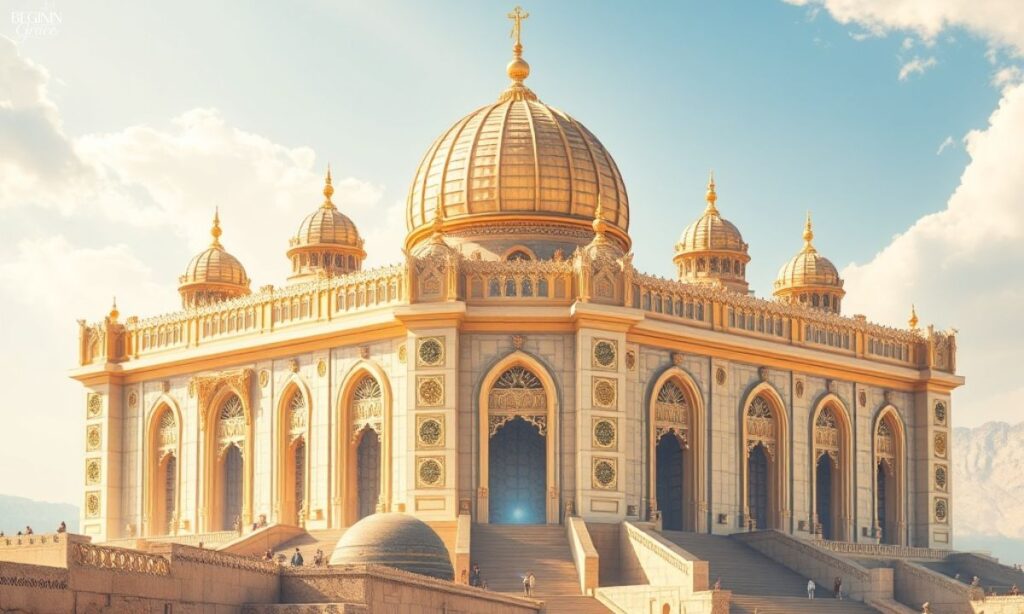
The city has a great, high wall with twelve gates, symbolizing both security and accessibility, with twelve angels stationed at the gates and the names of Israel’s twelve tribes inscribed upon them. These walls demonstrate that the city is protected and defined, yet the numerous gates show it’s not a fortress meant to keep people out but a secure home welcoming God’s people. The presence of angels at each gate may indicate both guardianship and honor, as heavenly beings attend the entrance of God’s glorified people. The inscription of Israel’s tribal names affirms God’s faithfulness to His covenant promises and shows that Israel’s story finds its fulfillment in the universal church. This imagery unites security with openness, showing that perfect safety doesn’t require isolation but exists where God’s presence reigns supreme.
Revelation 21:13-Her Gates
The gates are positioned three on each side—east, north, south, and west, showing that access to God’s city comes from every direction, welcoming people from all nations and corners of the earth. This arrangement reflects the camp of Israel in the wilderness, where three tribes camped on each side of the tabernacle, but now expanded to cosmic proportions. The universality of access fulfills prophetic promises that all nations would stream to God’s holy mountain in the last days. Each direction being equally represented demonstrates that no people group has privileged access, all come through Christ on equal terms. The symmetrical distribution of gates presents a picture of perfect order and balance, reflecting the harmony and justice that characterize God’s eternal kingdom.
Revelation 21:14-Her Foundations
The wall rests on twelve foundations bearing the names of the twelve apostles of the Lamb, establishing the church as built upon apostolic testimony about Jesus Christ. This foundation imagery connects to Paul’s teaching that the church is built on the foundation of the apostles and prophets with Christ Jesus as the cornerstone. The equal prominence of twelve tribes and twelve apostles demonstrates the continuity between Old and New Testaments, between Israel and the church, united in God’s single redemptive plan. These foundations show that our eternal destiny is secured not by our faithfulness but by the unshakeable testimony and teaching of those who walked with Jesus and were commissioned by Him. The apostles’ names on the foundations honor their role in God’s plan while reminding us that what we build on their teaching, Christ Himself,will endure forever.
Revelation 21:15-The Exact Measurements
The angel holds a golden measuring rod to measure the city, its gates, and its wall, demonstrating divine precision and the fulfillment of God’s perfect plan down to the smallest detail. This measuring echoes Ezekiel’s temple vision and Zechariah’s prophecy, but here the measurements reveal a completed reality rather than a future promise. The use of gold for the measuring rod suggests the preciousness and perfection of what is being measured, as well as the divine origin of these specifications. The act of measuring indicates ownership and consecration, this city belongs to God and is set apart for His purposes. Every measurement being recorded assures believers that God’s promises are specific, reliable, and will be fulfilled exactly as He has planned, leaving nothing to chance or approximation.
Revelation 21:16-Her Dimensions
The city is a perfect cube, measuring 12,000 stadia (about 1,400 miles) in length, width, and height, symbolizing absolute perfection and echoing the Holy of Holies in the temple. This cubic shape indicates that the entire city is holy ground, not just a small inner sanctuary, and all of God’s people have full access to His presence. The massive dimensions suggest abundance beyond comprehension,room for countless believers from every age and nation to dwell comfortably in God’s presence. The number twelve and its multiples (12,000) represent God’s people throughout Scripture, emphasizing that this city is sized for its purpose: housing the complete company of the redeemed. These measurements demonstrate that heaven isn’t ethereal or abstract but real, substantial, and more than adequate for all whom God has called to Himself.
Revelation 21:17-The Wall
The wall measures 144 cubits (about 200 feet) by human measurement, which is also the angel’s measurement, bridging divine revelation with human understanding. The thickness or height of this wall, while substantial, is relatively small compared to the city’s massive dimensions, suggesting security without imprisonment, boundaries without barriers. The number 144 (12 x 12) again emphasizes the people of God,twelve tribes and twelve apostles,whose identity is wrapped up in this holy city. The note that human and angelic measurements agree demonstrates that there’s no contradiction between God’s perspective and ours when we see truly; His truth is comprehensible and reliable. This detail assures us that what God has prepared is both transcendent and comprehensible, exceeding our imagination yet not foreign to our understanding.
Revelation 21:18-Transparent Beauty
The wall is made of jasper while the city itself is pure gold, transparent as glass, indicating both strength and purity, beauty and value beyond earthly comparison. This transparency suggests nothing is hidden in God’s city, all is open, honest, and pure, with no secrets or shadows. The combination of ultimate strength (jasper) and ultimate value (gold) shows that God’s dwelling is both secure and precious, protected and prized. The fact that gold is transparent defies natural properties, indicating we’ve moved beyond physical laws into a reality where matter itself is transfigured by God’s glory. This description challenges us to imagine beauty beyond our current capacity while assuring us that whatever we’ve treasured as valuable on earth is merely a shadow of heaven’s surpassing worth.
Revelation 21:19-20-Foundations Described
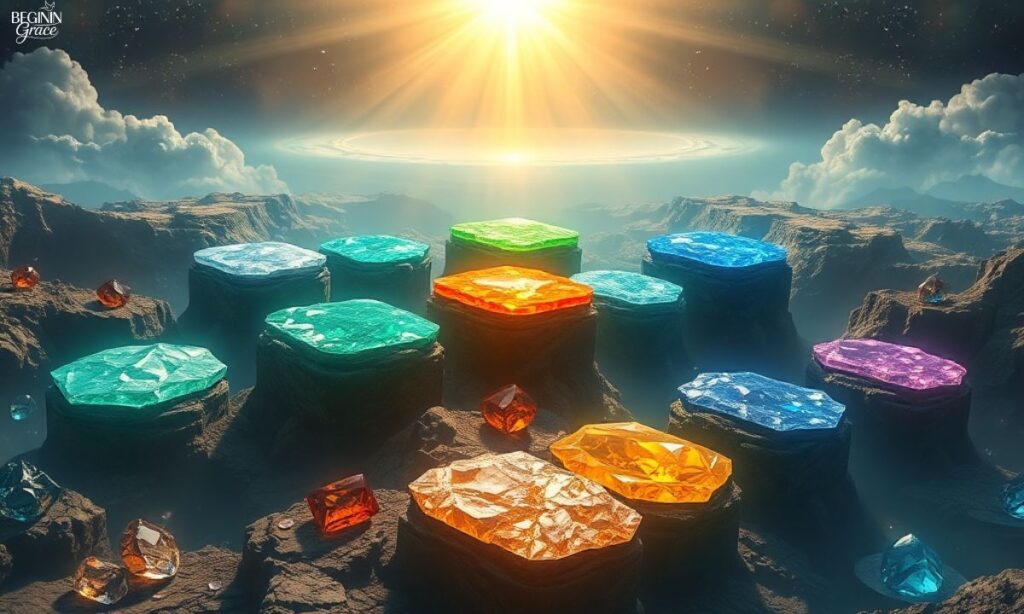
The twelve foundations are adorned with every kind of precious stone, each one named, displaying the infinite variety and beauty of God’s glory reflected through His redeemed people. These gems, jasper, sapphire, agate, emerald, onyx, ruby, chrysolite, beryl, topaz, turquoise, jacinth, and amethyst, may correspond to the stones on the high priest’s breastplate, linking the city to Israel’s worship traditions now fulfilled. The variety of colors and qualities in these stones suggests that unity in God’s kingdom doesn’t mean uniformity; each adds unique beauty to the whole. The placement of these precious materials in the foundations indicates that what’s most valuable is often foundational rather than superficial, hidden rather than displayed. This lavish decoration demonstrates that God holds nothing back in preparing a home for His beloved children, sparing no expense in demonstrating His love.
Revelation 21:21-Pearly Gates
Each of the twelve gates is made from a single pearl, and the city’s street is pure gold, transparent as glass, combining extravagant beauty with practical function. The pearl imagery is particularly poignant, as pearls are formed through suffering—an oyster’s response to irritation—symbolizing how the redeemed enter God’s kingdom through tribulation transformed into glory. These gates made of single, massive pearls defy natural possibility, pointing to God’s supernatural power and the value He places on access to His presence. The street of transparent gold suggests that even the most common surfaces in heaven exceed earth’s greatest treasures, and what we walk on there would be our highest prize here. This description challenges our value systems and teaches us to hold earthly riches lightly while treasuring the eternal inheritance that awaits God’s children.
Revelation 21:22-No Temple
John sees no temple in the city because the Lord God Almighty and the Lamb are its temple, indicating that mediated worship gives way to direct, unhindered communion with God. This absence of a physical temple marks the fulfillment of all that the temple represents, God’s presence is no longer confined to one space but fills all space. The inclusion of both God the Father and the Lamb emphasizes Christ’s full divinity and His eternal role as the mediator who brings us into God’s presence. The temple’s absence means no more separation between sacred and secular; all of life becomes worship in God’s immediate presence. This verse represents the ultimate goal of redemptive history: not better religious structures or practices, but the unveiled presence of God Himself dwelling with His people forever.
Revelation 21:23-Spiritual Light
The city needs neither sun nor moon because God’s glory illuminates it and the Lamb is its lamp, fulfilling Isaiah’s prophecy and revealing the source of all light. This divine illumination means no cycles of day and night, no seasons of spiritual darkness, and no need for created things to mediate God’s presence. The distinction between God’s glory and the Lamb as lamp may indicate Christ’s unique role in making the Father’s glory accessible and visible to humanity. This light is not merely physical but spiritual—the light of truth, holiness, love, and life that drives out all darkness of ignorance, sin, and death. The self-sustaining nature of this light demonstrates that in God’s presence, we find everything we need; He is the source of all life, truth, and joy.
Revelation 21:24-Its Population
The nations will walk by the city’s light, and the kings of the earth will bring their glory into it, indicating that the redeemed from every people group participate in the eternal kingdom. This verse challenges dispensational views that separate Israel and the church, showing instead a unified community of all whom God has saved. The reference to “kings of the earth” bringing their glory suggests that cultural and social achievements, when purified, find their place in God’s kingdom. The nations walking by the city’s light means that New Jerusalem serves as the center from which God’s glory radiates to all creation. This picture of diverse peoples and rulers bowing before God fulfills the universal scope of the Great Commission and demonstrates that God’s redemptive plan always intended to embrace all humanity.
Revelation 21:25-No Night
The city’s gates will never be shut by day, and there will be no night, meaning continuous access to God’s presence and unending security in His protection. The open gates demonstrate absolute safety, no enemy threatens, no fear justifies closing them, and no time is inappropriate for entering God’s presence. The absence of night eliminates the cover that darkness provides for evil deeds, ensuring that only goodness and truth characterize life in God’s city. This perpetual day recalls creation’s first day when God said “Let there be light,” now brought to eternal fulfillment in the uncreated light of God’s presence. The phrase connects to Jesus’s teaching that we must work while it is day, now realized in an endless day where we serve God without fatigue, limitation, or interruption.
Revelation 21:26-Glory and Honor
The nations will bring their glory and honor into the city, suggesting that whatever is noble, true, and beautiful from human culture finds its fulfillment in God’s eternal kingdom. This verse indicates that our earthly lives and achievements, when offered to God, are not wasted but somehow incorporated into eternity’s tapestry. The gathering of diverse cultural treasures demonstrates that God values the particular ways different peoples have reflected His image throughout history. This offering of glory and honor recalls the wise men bringing gifts to Jesus, now expanded to all nations presenting their best to Him. The verse challenges the notion that heaven will be culturally bland or that our earthly work is meaningless, instead suggesting redemption and transformation of all that is good.
Revelation 21:27-Purity
Nothing impure will ever enter the city, nor anyone who practices abomination or falsehood, but only those written in the Lamb’s book of life. This final verse of the chapter emphasizes the absolute holiness required for entrance into God’s presence, achievable only through Christ’s cleansing work. The exclusion of evil isn’t restrictive but protective, ensuring that the peace and joy of God’s kingdom remain unbroken forever. The reference to the Lamb’s book of life makes clear that entrance depends not on moral achievement but on having one’s name recorded through faith in Christ. This verse balances the chapter’s welcoming imagery with the sobering reminder that God’s holiness cannot coexist with unrepentant sin. The city’s purity ensures that we will never again experience the corruption, suffering, or loss that characterized the fallen world, but will dwell in perfect righteousness forever.
Revelation Chapter 21-Study/Review Questions:
1. What is the significance of the phrase “a new heaven and a new earth” in verse 1?
This opening declaration marks the culmination of God’s redemptive plan. The Greek word for new kainos doesn’t mean brand new in terms of never existing before, but rather renewed, transformed, and qualitatively different. This echoes Isaiah 65:17 and 2 Peter 3:13, where God promises a complete renewal of creation. The first heaven and earth have “passed away, suggesting not annihilation but transformation,the removal of all corruption, sin, and death that marred the original creation. This is the restoration that all of creation has been groaning for since the Fall (Romans 8:19-22).
2. Why is there “no longer any sea” in the new creation?
In ancient Jewish thought, the sea represented chaos, evil, and separation. In Genesis 1, God’s Spirit hovers over the chaotic waters before bringing order. The sea was also what separated John from his community while exiled on Patmos. Throughout Revelation, the sea has been associated with the beast (13:1) and the dead (20:13). The absence of the sea symbolizes the complete elimination of chaos, fear, danger, and separation in God’s renewed creation. It represents perfect order, peace, and unhindered communion between God and His people.
3. What does the Holy City, New Jerusalem, represent, and why does it come down from heaven?
The New Jerusalem represents the dwelling place of God with humanity, the ultimate fulfillment of the covenant relationship. It comes down from heaven to emphasize that salvation and the renewed creation are entirely God’s work, not human achievement. This city is prepared as a bride beautifully dressed for her husband, connecting to the church as the Bride of Christ (Ephesians 5:25-27). The descent of the city symbolizes heaven coming to earth, God’s space and human space finally united as originally intended. This is the reversal of Babel, where humans tried to build upward to heaven; instead, God brings heaven down to earth.
4. What is the meaning of God dwelling with humanity in verse 3?
Verse 3 is the climax of biblical theologyGod’s dwelling place is now among the people, and he will dwell with them. The Greek word for dwell (skenoo) literally means “to tabernacle” or pitch a tent, recalling the Tabernacle in the wilderness where God’s presence dwelled among Israel. This fulfills the progressive revelation of God’s presence: first in the Garden of Eden, then the Tabernacle, then the Temple, then in Christ John 1:14, the Word became flesh and dwelt among us), and finally in eternal, unmediated fellowship. The phrase “they will be his people, and God himself will be with them echoes the covenant formula repeated throughout Scripture (Leviticus 26:12, Jeremiah 31:33, Ezekiel 37:27).
5. What four things will be “no more” according to verse 4, and what is their theological significance?
God will wipe away every tear, and there will be no more death, mourning, crying, or pain. These four represent the complete reversal of the curse from Genesis 3. Death entered through sin; now it’s abolished (1 Corinthians 15:26). Mourning, crying, and pain are consequences of living in a fallen world—they encompass all forms of suffering, loss, and brokenness. The image of God wiping away tears is deeply personal and tender, showing His intimate care. The phrase “the old order of things has passed away” indicates that the entire system of sin, suffering, and death that has characterized human existence is completely eradicated. This isn’t merely comfort; it’s total transformation.
6. Who is seated on the throne in verse 5, and what is significant about Him speaking directly?
The One seated on the throne is God Almighty, and this is one of the few times in Revelation where God the Father speaks directly rather than through angels or Christ. His declaration “I am making everything new!” is present tense in Greek, emphasizing ongoing action, God is actively renewing all things. This parallels Isaiah 43:18-19 and 2 Corinthians 5:17. The command to “write this down, for these words are trustworthy and true” emphasizes the absolute reliability of this promise. In a book filled with symbolic visions, this direct divine speech underscores the certainty of what has been revealed.
7. What does “It is done” mean in verse 6?
It is done (Greek: gegonen) is similar to Jesus’ cry from the cross, “It is finished (tetelestai). This declaration announces the completion of God’s entire redemptive plan from Genesis to Revelation. God identifies Himself as “the Alpha and the Omega, the Beginning and the End, meaning He encompasses all of history and has brought it to its intended conclusion. The promise to give water from the spring of life freely to the thirsty echoes Isaiah 55:1 and Jesus’ words in John 4:14 and 7:37-38. This water represents eternal life, the Holy Spirit, and complete satisfaction in God, all given as a gift, not earned.
8. What is promised to “the one who is victorious” in verse 7?
The victorious one (Greek: nikao, meaning to conquer or overcome) will inherit all this referring to the new creation, the intimacy with God, and freedom from suffering. Most importantly, God promises I will be his God and he will be my son/daughter. This is the ultimate inheritance,not merely things, but relationships. This familial language intensifies the covenant relationship even beyond “my people. The concept of overcoming threads through Revelation (chapters 2-3) and refers to those who remain faithful to Christ despite persecution, temptation, or trial. First John 5:4-5 clarifies that faith in Jesus is what gives victory.
9. What is the significance of the list of people excluded from the Holy City in verse 8?
The list includes the cowardly, unbelieving, vile, murderers, sexually immoral, those who practice magic arts, idolaters, and all liars. Their destiny is the fiery lake of burning sulfur, which is the second death. This isn’t arbitrary exclusion but the natural consequence of refusing God’s offer of life. The cowardly refers to those who denied Christ under pressure. Unbelieving means persistent rejection of God. Each category represents rebellion against God’s character and kingdom. The inclusion of liars alongside murderers emphasizes that all sin, regardless of human rankings, separates from God. This sobering reminder emphasizes human choice and the seriousness of rejecting God’s grace.
10. Who shows John the vision of the bride in verse 9, and why is this significant?
One of the seven angels who had the seven bowls full of the seven last plagues shows John “the bride, the wife of the Lamb. This is significant because the same angel who revealed judgment now reveals glory,showing that God’s judgment clears the way for His ultimate blessing. The equation of the bride with the Holy City reveals that the New Jerusalem isn’t merely a location but a community,the redeemed people of God. The church isn’t just going to a place; the church becomes that place, the dwelling of God’s presence.
Revelation Chapter 21-Personal Reflection Question:
To me, the best part of the new world will be the complete peace that God promises. There will be no fear, no pain, and no sadness anymore. I imagine a place where every moment feels safe and full of joy. Living in God’s presence forever will be the greatest blessing. The beauty, the purity, and the closeness to Him will make this new world truly perfect.
Revelation Chapter 21-Behind the Scenes Stuff
The description of the New Jerusalem is truly amazing. It is so big and so beautiful that my mind can’t fully understand it. I will be honest, I really don’t get how everything will look. But when I remember that my body is called a “temple of the Holy Spirit, then I realize that this heavenly city must be far greater than anything we see in this world. It will be spiritual, pure, and completely different from the cities we know today.
Right now, I am not someone who enjoys city life. I usually prefer quiet and simple places, and big cities do not attract me. But I believe that when I finally enter New Jerusalem, all my feelings will change. I know by faith that I will feel peace, joy, and contentment like never before. It will be a place where my heart will finally feel at home, far better than anything I can imagine in this life.
Frequently Asked Questions
What is Revelation Chapter 21 about
It tells about the new heaven, new earth, and God’s final plan for His people.
What is the New Jerusalem in Revelation 21
It is the holy city prepared by God for His children.
What does “no more tears” mean in Revelation 21
It means God will remove all pain, sorrow, and death forever.
What does the new heaven and new earth represent
It shows a fresh beginning where God lives with His people.
What does Revelation 21 teach about God’s presence
It says God will dwell with humanity in a close, loving way.
Why is the New Jerusalem described with precious stones
It shows the beauty, purity, and glory of God’s eternal home.
What is the meaning of “Alpha and Omega” in Revelation 21
It shows God is the beginning, the end, and in control of everything.
Who will inherit the promises in Revelation 21
Those who overcome and stay faithful to God.
What warning does Revelation 21 give
It warns that the wicked will not enter God’s holy city.
Why is Revelation 21 important for believers
It gives hope, comfort, and a clear picture of God’s future kingdom.
Conclusion
Revelation Chapter 21 gives us a strong message of hope. It shows a new heaven and a new earth. God promises to remove pain and sorrow. These verses remind us that His plan is perfect.
This chapter also shows God’s love for His people. New Jerusalem is a place of beauty and peace. It is a home prepared for all who stay faithful. These words encourage us to trust God every day.

Samuel Reed is a devoted Christian writer with 4 years of experience sharing Bible verses, blessings, and prayers on Beginingrace.com. His writings reflect faith, hope, and the peaceful message of God’s grace for every heart