
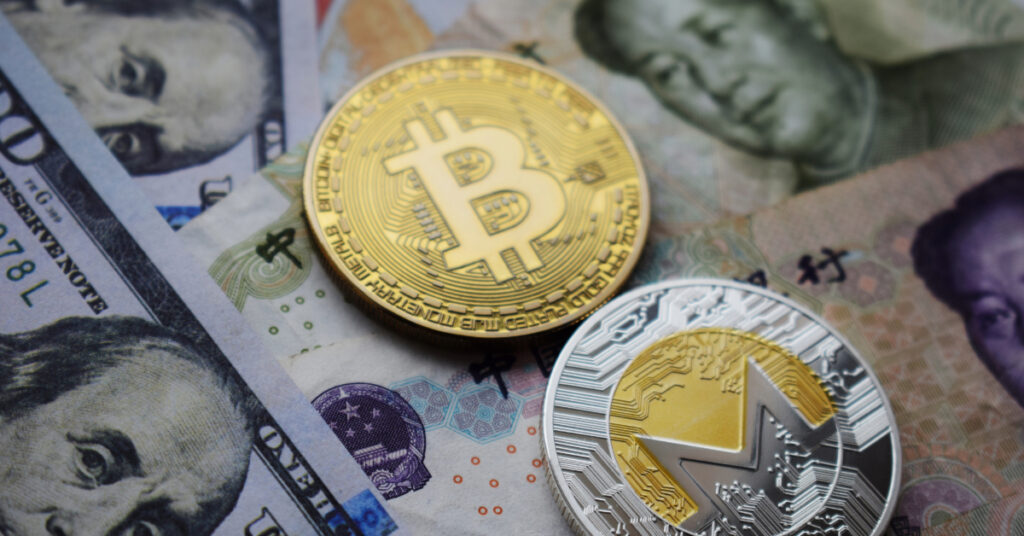
Transferring funds from Bitcoin (BTC) to Monero (XMR) isn’t so much a financial transaction in the traditional sense as it is a shift in how users interact with digital money. Both assets exist in the same cryptocurrency ecosystem, but they solve different problems and interpret the concept of transparency differently.
Bitcoin has long been the market’s foundational asset. It is used as a store of value and a benchmark for the entire industry. Monero occupies a narrower but fundamentally different niche: it was created around the idea of privacy and minimizing public information about transactions. This is why exchanging BTC for XMR is often associated not with market fluctuations, but with the choice of a different financial model, while benefiting from the convenience of using an aggregator.
Why users switch from Bitcoin to Monero
The reasons for such a switch are rarely random. Typically, it is a conscious decision to change the level of privacy in their transactions or distribute assets between different blockchain approaches. Bitcoin records every transaction in a public ledger, where, under certain conditions, the movement of funds can be analyzed. The Monero cryptocurrency is structured differently: it hides transaction details and makes them inaccessible to external observation. Because of this, the transition to XMR is most often driven by practical reasons:
- the desire to increase financial privacy;
- split capital between different blockchain types;
- use of Monero as an alternative storage medium;
- working with services that require XMR;
- reduced transparency of fund movements;
- diversification of a cryptocurrency portfolio;
- interest in private transaction technologies.
Such an exchange does not mean abandoning Bitcoin; rather, it expands the range of available tools.
How do Bitcoin and Monero differ in their logic?
BTC is built on the principle of openness. Any transaction can be verified, and the history of fund movements is available on the blockchain. This makes the network transparent and predictable, while simultaneously enabling activity analysis. Monero takes a different approach. It focuses on hiding information about the sender, recipient, and transaction amount. This is achieved through specialized cryptographic mechanisms built into the protocol.
The differences manifest themselves in several aspects:
- degree of transaction transparency;
- blockchain operating model;
- approach to participant identification;
- transaction processing structure;
- network usage patterns;
- protocol development goals;
- asset use cases.
What’s Important When Exchanging BTC for XMR
Converting between Bitcoin and Monero requires attention to several technical and practical aspects. Although both cryptocurrencies are actively used, this type of conversion is considered less widespread than exchanging BTC for stablecoins or major altcoins. A key feature of this type of transaction is that the outcome depends not only on the price but also on the quality of the transaction execution.
Users can choose different formats for receiving Monero for Bitcoin, each requiring a different level of involvement. Exchanges offer more analytical tools but require an understanding of the interface and market logic. P2P transactions offer flexibility but are dependent on the counterparty. Simpler services reduce the process to a single transaction, where the user receives XMR without any trading actions. In reality, the choice is often determined not by strategy, but by convenience: how quickly and without unnecessary steps one can obtain a result.
The Role of Electronic Exchangers in Conversion
Electronic exchange platforms are used quite frequently because they eliminate the need to delve into trading infrastructure. The user doesn’t deal with orders or charts; they simply exchange one asset for another and receive the result in their wallet.
This format is especially suitable when:
- it is important to complete the exchange quickly;
- there is no goal of trading;
- the transaction is practical in nature;
- simplicity of the process is a priority;
- the user wants to minimize interaction with the market.
In this case, the electronic exchanger acts as a tool for direct conversion between two different cryptocurrency philosophies.

Samuel Reed is a devoted Christian writer with 4 years of experience sharing Bible verses, blessings, and prayers on Beginingrace.com. His writings reflect faith, hope, and the peaceful message of God’s grace for every heart