

Each year, the Christian calendar invites us to pause and contemplate a moment of profound cosmic significance: the Epiphany, that luminous season when the light of Christ burst forth upon the world, not merely as a blessing for one people, but as a revelation for all humanity. When we prepare a sermon for the Epiphany, we are drawn to the ancient prophecy of Isaiah and the account of the magi who journeyed from distant lands, their eyes fixed upon a star that would forever change the trajectory of human history.
The Greek word “epiphania” means manifestation or appearance, a revealing of what was previously hidden. On this holy day, we celebrate not just the birth of Jesus, but the apocalyptic unveiling of God’s plan for redemption. The wise men who arrived bearing gifts witnessed this revelation firsthand, and their journey across desert and mountain stands as a testament to the universal nature of Christ’s coming. In contemplating a sermon for the Epiphany, we discover that this ancient event continues to speak powerfully to our modern condition, calling us to recognize the light that still shines in our darkness.
The Theme of Light: Christ’s Illumination of the World
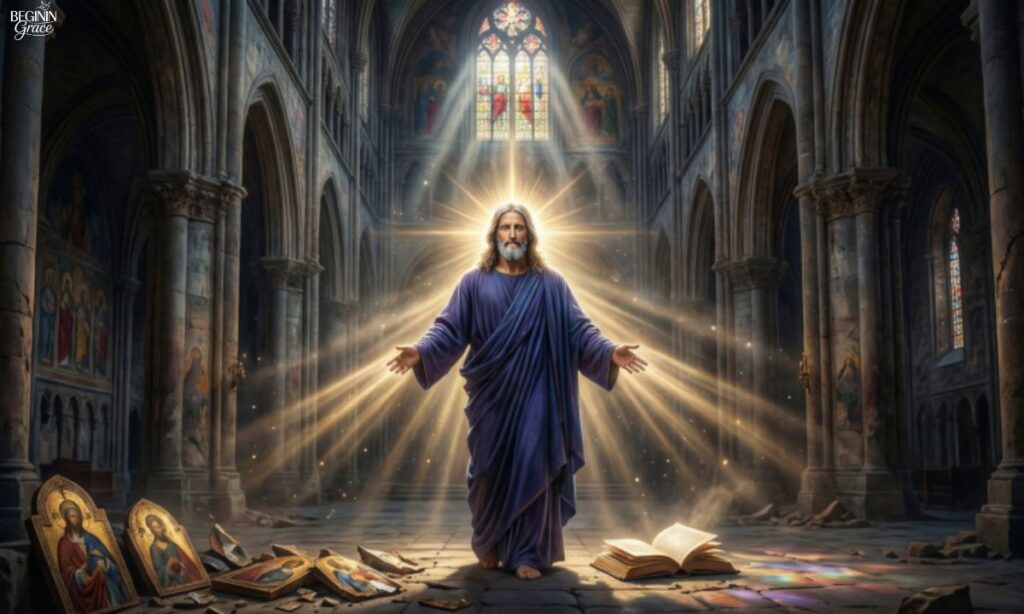
Isaiah’s magnificent proclamation rings across the centuries with startling clarity: Arise, shine, for your light has come, and the glory of the Lord rises upon you” (Isaiah 60:1). These words, originally spoken to Israel in exile, find their ultimate fulfillment in the incarnation of Christ. The Epiphany is fundamentally about light, not the pale glow of earthly luminescence, but the transcendent radiance of divine presence breaking into the shadowed corridors of human existence.
Throughout Scripture, light serves as a primary metaphor for God’s truth, goodness, and redemptive power. When John opens his gospel, he declares that “the true light that gives light to everyone is coming into the world” (John 1:9). Jesus himself claimed, “I am the light of the world. Whoever follows me will never walk in darkness, but will have the light of life” (John 8:12). The Epiphany event, the arrival of the magi, the adoration of the Christ child, the homage paid by those from beyond Israel’s borders, embodies this truth in narrative form.
The light of Christ operates on multiple levels. Spiritually, it penetrates the deepest recesses of the human heart, illuminating our sinfulness and awakening us to the possibility of redemption. Metaphorically, it represents the clarity, direction, and hope that Christian faith brings to human existence. Where there was confusion, Christ brought understanding. Where there was despair, He brought hope. Where there was spiritual blindness, He brought vision.
Biblical Context: The Magi’s Journey and Universal Redemption
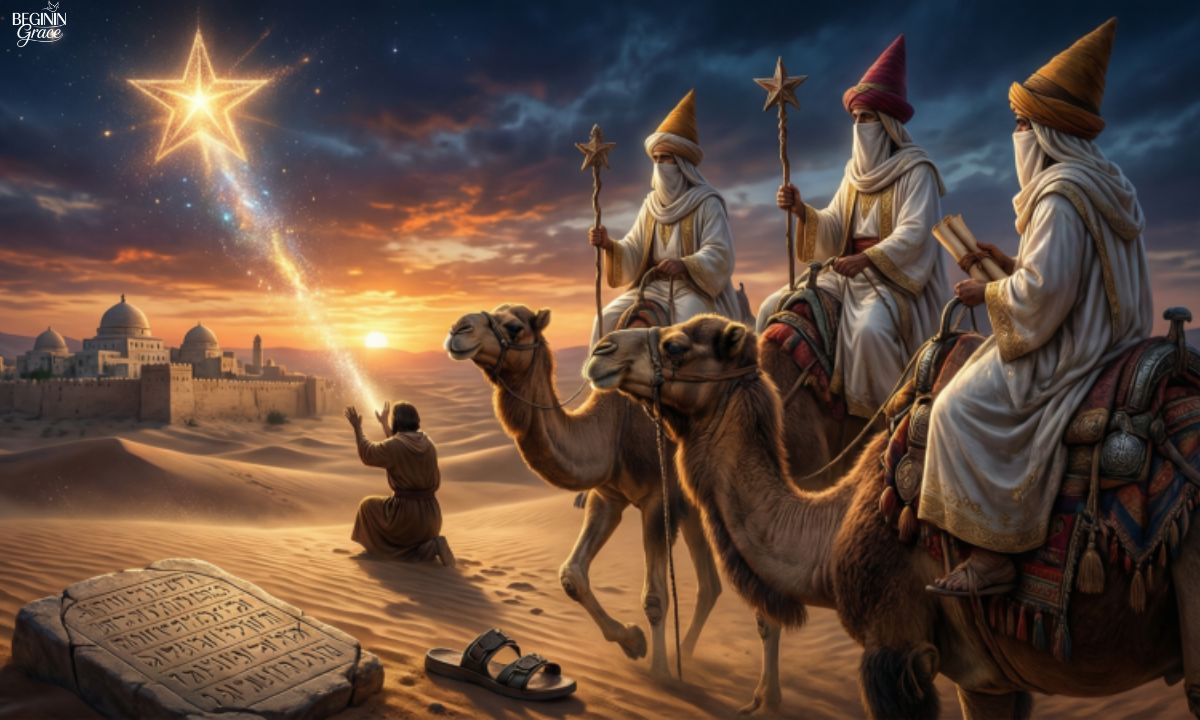
The second chapter of Matthew presents us with one of Scripture’s most evocative scenes: wise men from the East, guided by a mysterious star, arriving in Jerusalem to inquire about “the one who has been born king of the Jews” (Matthew 2:2). These were not Jews; they were Gentiles, possibly Persian or Arabian astrologers who had read the heavens and perceived the cosmic significance of an unusual celestial phenomenon. Their presence at the manger is theologically momentous, for it signals that Christ’s salvation extends beyond the boundaries of ethnic and religious identity.
The journey of the magi is one of the most compelling narratives in Scripture, not least because it demonstrates the persistence of faith seeking truth. These men traveled hundreds of miles across inhospitable terrain, driven by conviction rather than compulsion, by inner knowledge rather than external command. When King Herod’s advisors pointed them to Bethlehem, fulfilling Micah’s ancient prophecy, they continued their quest until they found the child. Matthew tells us that upon seeing Jesus, “they bowed down and worshiped him. Then they opened their treasures and presented him with gifts of gold, frankincense and myrrh (Matthew 2:11).
This moment represents the pivotal truth that Christ came not as a tribal deity for Israel alone, but as Savior for all nations. The magi’s homage demonstrates that the light of Christ has the power to draw people from every nation and background into a relationship with God. Their presence at Bethlehem foreshadows the Great Commission, when the disciples would be commanded to “go and make disciples of all nations (Matthew 28:19). A sermon for the Epiphany must emphasize this universality, that the light of Christ transcends geographical, cultural, and religious boundaries, calling all humanity into the embrace of God’s redemptive love.
The Stark Contrast: Darkness Before the Light
To truly appreciate the significance of Christ’s coming, we must contemplate the spiritual landscape before His incarnation. The ancient world, despite its philosophical sophistication and technological accomplishments, existed in profound spiritual darkness. The pre-Christian Greco-Roman world was characterized by moral ambiguity, existential anxiety, and spiritual emptiness. Religious systems offered little comfort or genuine transformation; the gods of antiquity were capricious, often cruel, and far removed from human suffering.
Consider the condition of the Roman Empire in the first century. Slavery was endemic, with millions of human beings treated as mere property. Women possessed few rights and were considered legally inferior to men. The entertainment of the masses frequently involved violence and death, as witnessed in the gladiatorial games that captivated urban populations. Infanticide was practiced, unwanted children abandoned to death or slavery. The wealthy lived in luxury while the poor subsisted in squalor. Despite remarkable engineering and architectural achievements, the empire was spiritually bankrupt.
The darkness also characterized the inner life of individuals. Human beings, left to their own devices, frequently enslaved themselves to destructive passions, anger, greed, lust, and pride. The apostle Paul would later describe this condition as spiritual death: “For the wages of sin is death” (Romans 6:23). People longed for meaning, for purpose, for transcendence, but had no reliable guide to lead them toward genuine fulfillment.
Into this darkness came the light of Christ. His teachings introduced a revolutionary ethic of love, forgiveness, and human dignity. He elevated women, welcomed the marginalized, and proclaimed that the last would be first and the least would be greatest. He healed the sick, fed the hungry, and forgave the sinful. His light began to transform the world, gradually illuminating moral truths that had been obscured by human darkness. Over the ensuing centuries, as Christianity spread throughout the world, it became a liberating force, abolishing slavery, establishing hospitals and universities, promoting literacy and human rights, creating a framework for human flourishing based on the inherent dignity of every person made in God’s image.
The contrast between the darkness before and the light after Christ’s coming is not merely poetic; it is historically demonstrable. A sermon for the Epiphany appropriately reminds us that this light was neither inevitable nor easily established. It required sacrifice, martyrdom, and steadfast commitment from countless believers who chose truth over comfort, love over hatred, and sacrifice over self-preservation.
Living as Light: Practical Application for Modern Believers

The question that confronts us at Epiphany is neither merely historical nor academic, it is intensely personal: How do we, as modern believers living nearly two thousand years after the incarnation, participate in this revelation of light? How do we embody the truth that Christ came to illuminate?
Jesus made this expectation explicit when He told His disciples, “You are the light of the world” (Matthew 5:14). This is not merely metaphorical language; it is a direct assignment of role and responsibility. We are called to be bearers of Christ’s light in our contemporary context, just as the magi bore witness to His light in theirs.
Living in Faith: Authentic Christian witness begins with genuine faith, a deep, personal conviction that Jesus is Lord and Savior. This faith is not blind; it is grounded in the testimony of Scripture, the witness of the church throughout history, and our own encounter with the risen Christ. When we genuinely believe that Christ is “the way and the truth and the life” (John 14:6), we naturally begin to reflect His light in our words and actions. This might mean standing up for truth in a culture of relativism, maintaining integrity in business dealings when dishonesty would be profitable, or extending grace to those who have wronged us.
Worship as Surrender: The magi’s journey culminated in an act of worship, they prostrated themselves before the Christ child and offered their most precious possessions. Modern worship similarly requires the surrender of our whole selves to God. This might be expressed through faithful participation in corporate worship, through private prayer and meditation, or through the dedication of our time and talents to God’s purposes. When we worship genuinely, we acknowledge that Christ is the center of our lives and that our ultimate allegiance belongs to Him rather than to cultural pressures, material accumulation, or personal ambition.
Consider the example of modern prophetic witnesses like Martin Luther King Jr., who drew his courage for the civil rights movement from deep wells of Christian faith and worship. His sermons were steeped in Scripture, his activism rooted in the conviction that all people are created in God’s image and therefore deserve dignity and justice. His willingness to suffer, and ultimately to die, for this vision demonstrates how worship and obedience intersect to create transformative light in the world.
Obedience in Action: Living as light requires more than sentiment; it demands obedience to Christ’s teaching and example. Jesus taught us to love our enemies, to care for the poor and marginalized, to forgive without limit, and to sacrifice our own comfort for the wellbeing of others. Practically, this might mean volunteering at a homeless shelter, mentoring a young person struggling with their identity, advocating for just policies in our communities, or simply listening with compassion to someone in pain. When we act according to Christ’s teachings, we become living embodiments of His light, bearing witness to a better way of living.
Sacrifice and Suffering: The magi brought myrrh, a substance used for burial, which speaks to the sacrificial dimension of Christian discipleship. Jesus taught that “whoever wants to be my disciple must deny themselves and take up their cross and follow me” (Matthew 16:24). This does not necessarily mean martyrdom in our context, but it does mean a willingness to subordinate our desires to God’s purposes, to bear the cost of faithfulness, and to endure opposition when our light threatens the darkness. A businesswoman who refuses to participate in exploitative practices, accepting lower profits and social criticism as the cost of integrity, is bearing her cross. A teenager who chooses authentic friendship over social status, standing with the outcast instead of joining the popular crowd, is carrying her cross.
The Symbolism of the Gifts: Gold, Frankincense, and Myrrh

The gifts presented by the magi are rich with theological significance, each representing a dimension of the devotion Christ demands and deserves.
Gold: This precious metal, universally recognized as a symbol of kingship and wealth, acknowledges the royal nature of Christ. We are called to honor Christ as king, to recognize His sovereignty over our lives and all of creation. Offering gold represents the giving of what we most value, our time, our talents, our resources. When we consecrate our material blessings to God’s purposes, we imitate the magi’s generous act. This might mean tithing to support the church’s mission, using our professional skills in service to God’s kingdom, or investing our time in relationships that matter eternally.
Frankincense: This aromatic resin was used in temple worship and carried associations with prayer, praise, and the presence of God. The offering of frankincense represents worship, the lifting of our hearts and voices to honor and adore Christ. It acknowledges that our deepest need is not material satisfaction but intimate communion with God. When we worship with genuine passion and devotion, when we surrender our doubts and defenses in God’s presence, we offer frankincense. This is particularly important in our contemporary culture, which often reduces religion to ethical principles or self-help psychology. Authentic Christianity demands passionate worship, the recognition that we are encountering something transcendent and holy that calls forth our deepest reverence and love.
Myrrh: This bitter substance, also associated with suffering and death, points to the sacrificial dimension of Christ’s mission and our response to Him. Jesus came not merely to teach or heal, but ultimately to die, to offer His own life as a ransom for our sins. The myrrh reminds us that following Christ requires a willingness to suffer, to embrace the cross as well as the crown. In our personal lives, this means accepting the difficulties that inevitably arise when we choose fidelity to Christ over comfort. It means compassion for those who suffer, solidarity with the marginalized, and willingness to bear witness to justice even at personal cost.
Together, these three gifts encapsulate the Christian life: the dedication of our resources (gold), the elevation of our worship (frankincense), and the acceptance of suffering when fidelity demands it (myrrh). They represent the totality of what we are called to offer to Christ—not partial commitment, but complete self-giving.
The Epiphany Vision for Today

A sermon for the Epiphany in the contemporary world must speak to our particular condition. We live in an age of unprecedented technological advancement yet persistent spiritual emptiness. We have more information available at our fingertips than any previous generation, yet many feel more confused and alienated than ever. We have conquered many physical enemies through medicine and science, yet anxiety, depression, and despair remain epidemic. The light of Christ is as urgently needed today as it was two thousand years ago.
The contemporary world desperately needs witnesses to the light. It needs people whose lives testify to the reality of transformation in Christ, individuals who demonstrate that forgiveness, reconciliation, and love are genuinely possible, even in a world conditioned toward cynicism and self-interest. It needs prophetic voices willing to critique injustice and call for the implementation of God’s kingdom principles in our social structures. It needs communities of faith that welcome the broken, the questioning, and the struggling, offering authentic hospitality and genuine spiritual companionship.
The magi’s journey reminds us that seeking truth and following light often requires movement, risk, and perseverance. They could have remained in their homelands, pursuing comfort and security. Instead, they ventured into the unknown, guided by a star that seemed to promise something extraordinary. Their example encourages us not to settle for the spiritual mediocrity or cultural conformity that surrounds us, but to actively seek the living Christ, to follow where His light leads us, and to share that light with others.
Frequently Asked Questions
What is the Epiphany in Christianity
The Epiphany celebrates the revelation of Christ to the world, especially the visit of the Magi.
Why is Epiphany called the feast of light
It symbolizes the light of Christ shining into darkness and guiding all nations.
Who visited Jesus on the Epiphany
The Magi, or Wise Men, traveled from the East to honor Jesus with gifts.
What does the light of Christ represent
It represents truth, salvation, and God’s presence entering the world.
How is Epiphany different from Christmas
Christmas celebrates Christ’s birth; Epiphany celebrates His revelation to the Gentiles.
Why do Christians read Isaiah 60:1-6 on Epiphany
It prophesies the nations coming to the light of God, fulfilled in Christ’s manifestation.
What lesson can we learn from the Magi
Faith, persistence, and seeking Christ lead to spiritual enlightenment.
How do churches celebrate the Epiphany
Through special services, blessings of homes, and sometimes processions or star displays.
Can the light of Christ guide everyone
Yes, Epiphany shows Christ’s light is for all people, not just a chosen group.
How can we reflect on Epiphany today
By opening our hearts to Christ, spreading love, and sharing His light with others.
Conclusion
The Epiphany reminds us that Christ is the light for everyone. His birth was not just for a few, but for all nations. The Magi shows us that seeking Jesus brings hope and joy. We are called to follow this light in our own lives.
Christ’s light guides us through darkness and challenges. By sharing His love, we reflect His light to others. Epiphany encourages faith, peace, and understanding among all people. Let us welcome Christ’s light every day and live in His truth.

Samuel Reed is a devoted Christian writer with 4 years of experience sharing Bible verses, blessings, and prayers on Beginingrace.com. His writings reflect faith, hope, and the peaceful message of God’s grace for every heart