
The story of Christ’s birth has been told and retold for over two thousand years, yet it never loses its power to move hearts and transform lives. At the center of this sacred narrative lies what many consider the first Christmas sermon, not delivered from a grand pulpit, but announced by angels to humble shepherds on a hillside near Bethlehem. This divine message continues to resonate through the centuries, reminding us of the profound love, hope, and joy that entered the world on that holy night.
The Historical Context of Christ’s Birth
To truly appreciate the significance of the first Christmas sermon, we need to understand the world into which Jesus was born. First-century Judea was a land under Roman occupation, where the Jewish people longed for deliverance and awaited their promised Messiah. The political climate was tense, taxation was burdensome, and most people lived in poverty and uncertainty. Into this troubled world came a message of hope that would change everything.
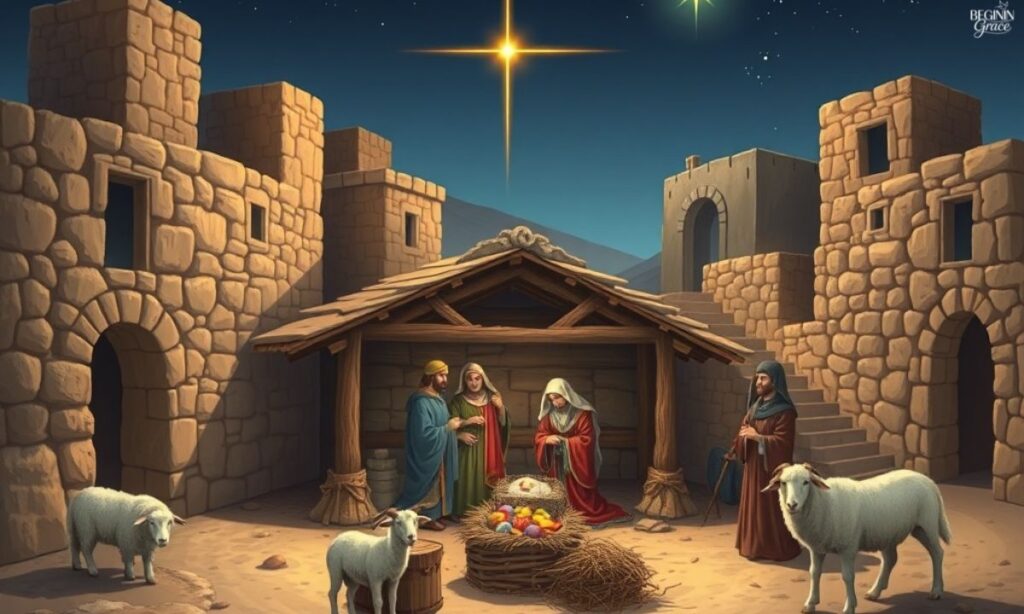
The Christmas sermon delivered by angels that night was revolutionary in its simplicity and inclusivity. God chose to announce the birth of His Son not to kings or religious leaders, but to working shepherds, people often marginalized in society. This choice itself was a sermon, proclaiming that salvation was for everyone, regardless of social status or worldly achievement. The setting was equally humble: a stable in Bethlehem, far from the centers of power and prestige.
Mary and Joseph’s journey to Bethlehem was prompted by a Roman census, a requirement that forced them to travel while Mary was heavily pregnant. The fact that there was no room at the inn speaks to the overcrowded conditions and the lack of special consideration for a young couple in need. Yet in this seeming rejection and hardship, God’s perfect plan was unfolding. The King of Kings would be born in the most humble circumstances imaginable.
This historical context makes the Christmas sermon all the more remarkable. The angels proclaimed “good news of great joy” to people who desperately needed to hear it. In a world filled with darkness, uncertainty, and oppression, the message was clear: Light had come. Hope had arrived. God had not forgotten His people.
Key Messages from the First Christmas Sermon

The Christmas sermon delivered by the heavenly host contained several profound messages that continue to speak to us today. The angel’s opening words, “Fear not,” addressed the natural human response to divine encounters but also spoke to the deeper fears of that troubled time. This simple phrase reminds us that God’s presence brings peace rather than terror, comfort rather than anxiety.
The core message was breathtakingly simple yet infinitely profound: “For unto you is born this day in the city of David a Savior, which is Christ the Lord.” These words declared that the long-awaited Messiah had arrived, that salvation was now available, and that God’s promises were being fulfilled. The Christmas sermon emphasized immediacy,”this day”,reminding the shepherds and all who would hear that God’s intervention in human history was happening right then and there.
Perhaps one of the most beautiful elements of this first Christmas sermon was the proclamation of peace: “Glory to God in the highest, and on earth peace, good will toward men.” This wasn’t just wishful thinking or empty sentiment. It was a declaration that through Christ’s birth, reconciliation between God and humanity was now possible. The peace announced wasn’t merely the absence of conflict but the presence of wholeness, harmony, and divine favor.
The angels also identified Jesus with specific titles that revealed His nature and mission. He was called “Savior,” indicating His role in delivering humanity from sin and death. He was Christ,” meaning the anointed one, the Messiah promised throughout Hebrew scripture. And He was “Lord,” a title of authority and divinity. Each designation in this Christmas sermon painted a fuller picture of who this baby in the manger truly was.
Lessons on Faith and Hope for Today

The Christmas sermon speaks powerfully to our modern need for faith and hope. Just as the shepherds had to decide whether to believe the angelic message and go to Bethlehem, we too face daily choices about faith. The shepherds’ response teaches us something important: they didn’t just hear the message and nod in agreement, they immediately went to see for themselves. Active faith requires movement, investigation, and personal encounter with Christ.
Hope is woven throughout the fabric of the Christmas sermon. For people living in darkness, whether in first-century Judea or twenty-first-century uncertainty, the message remains the same: God has not abandoned us. He has entered into our world, our struggles, and our pain. This hope isn’t based on changing circumstances or positive thinking, but on the unchanging character of God and His proven faithfulness through history.
The Christmas sermon also teaches us about trust in God’s timing and methods. The Messiah didn’t arrive as expected, not as a conquering warrior king, but as a vulnerable infant. God’s ways often surprise us, yet they are always perfect. When we’re tempted to lose hope because things aren’t unfolding as we planned, we can remember that God’s greatest gift to humanity came wrapped in swaddling clothes and lying in a manger.
Today’s world often feels as chaotic and uncertain as the world into which Jesus was born. We face our own forms of darkness, loneliness, division, anxiety, and suffering. Yet the Christmas sermon reminds us that light shines brightest in darkness. The same message that brought joy to frightened shepherds can bring joy to frightened people today. Faith isn’t about having all the answers; it’s about trusting the One who does.
The Role of Angels and Shepherds in the Nativity Story
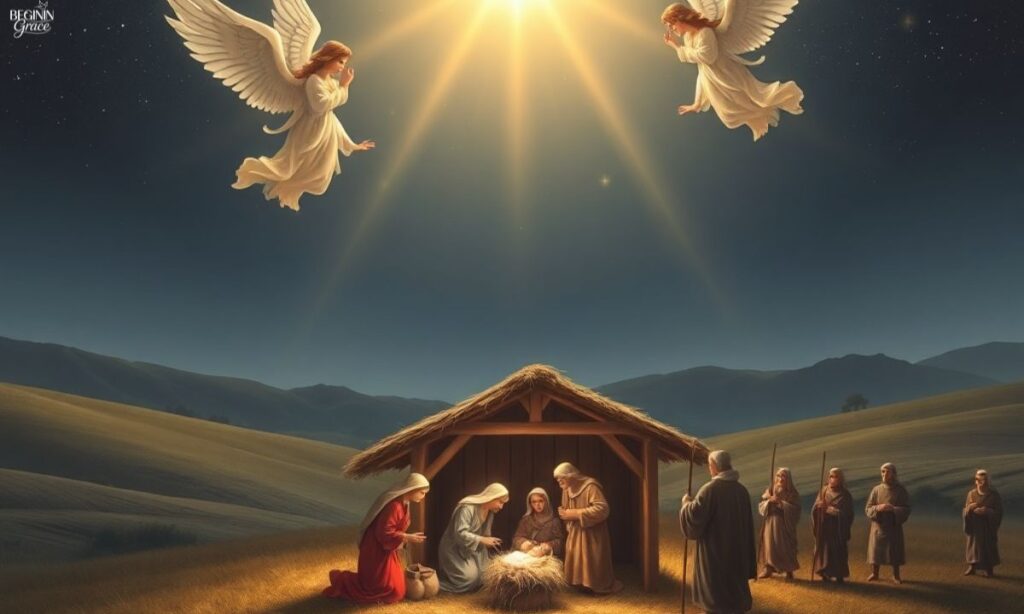
The angels who delivered the first Christmas sermon were God’s chosen messengers, bridging heaven and earth with their announcement. Their appearance was so glorious that the shepherds were terrified, yet their message was one of joy and peace. This contrast reminds us that encounters with the divine can be both awesome and comforting, overwhelming yet ultimately reassuring.
The multitude of the heavenly host that joined in praise after the initial Christmas sermon gives us a glimpse into the cosmic significance of Christ’s birth. All of heaven was celebrating this moment. The angels, who had witnessed creation itself, recognized the birth of Jesus as another pivotal moment in God’s redemptive plan. Their worship, Glory to God in the highest, showed that the proper response to God’s great gift is praise and adoration.
The shepherds, meanwhile, represent humanity’s response to God’s invitation. These weren’t religious scholars or people of influence; they were ordinary workers doing their jobs when heaven broke into their night. Their inclusion in the Christmas sermon demonstrates God’s heart for the overlooked and marginalized. God delights in revealing Himself to those who might seem insignificant by worldly standards but who have humble, receptive hearts.
The shepherds’ immediate response to the Christmas sermon is instructive. Luke’s Gospel tells us they said to one another, “Let us now go even unto Bethlehem, and see this thing which is come to pass.” They didn’t debate or delay; they acted on the message they’d received. After encountering Jesus, they became evangelists themselves, spreading the word about what they’d seen and heard. True encounters with Christ naturally overflow into testimony.
Experiencing the Joy of Christmas Spiritually
The joy proclaimed in the Christmas sermon wasn’t superficial happiness but a deep, spiritual joy rooted in the reality of God’s love and salvation. This joy doesn’t depend on circumstances, gifts, or festivities, it flows from recognizing what God has done for us through Christ. When the angels announced “good tidings of great joy, they were speaking of something that would sustain believers through every season of life.
Experiencing Christmas joy spiritually begins with slowing down enough to reflect on the true meaning of the season. In our busy modern lives, filled with shopping, parties, and obligations, we can easily miss the wonder of the incarnation, that God became human to dwell among us. Taking time for prayer, scripture reading, and quiet reflection helps us tune our hearts to the same frequency as that first Christmas sermon.
The joy of Christmas also comes through gratitude. When we truly grasp that God loved us enough to send His Son into our broken world, gratitude naturally follows. This isn’t gratitude for material blessings, though those are appreciated, but gratitude for the gift of salvation, hope, and eternal life. The Christmas sermon reminds us that we’ve been given something infinitely precious that no amount of money could buy.
Sharing joy with others is another way to experience the spiritual dimension of Christmas. Just as the shepherds couldn’t keep the good news to themselves, we’re called to spread the joy of Christ’s birth through our words, actions, and attitudes. Acts of kindness, generosity toward those in need, and taking time to encourage others all reflect the light of Christ that the Christmas sermon first announced. Joy multiplies when it’s shared.
How the First Christmas Shapes Modern Celebrations

The first Christmas sermon has profoundly influenced how we celebrate Christmas today, even in our increasingly secular culture. Many of our traditions, from nativity scenes to Christmas carols, directly connect to the events of that holy night. When we display shepherds and angels in our decorations, we’re honoring the original recipients and messengers of the Christmas sermon.
Church services on Christmas Eve and Christmas Day often reenact or reflect on the nativity story, keeping the Christmas sermon alive for new generations. The reading of Luke’s Gospel account, with its beautiful description of angels and shepherds, has become a beloved tradition in countless congregations. These services help us remember that Christmas is fundamentally about Christ’s birth, not just family gatherings and gift exchanges.
The practice of giving gifts at Christmas also connects to the Christmas sermon’s message of God’s ultimate gift to humanity. While the wise men’s gifts to Jesus came later in the story, the entire celebration of gift-giving reflects the generosity of God in sending His Son. When we give thoughtfully and sacrificially to others, we echo the divine love that motivated the incarnation that the angels announced.
Even secular Christmas traditions often carry echoes of the Christmas sermon. The emphasis on peace, goodwill, and compassion that characterizes the season reflects the angels’ proclamation of “peace on earth, good will toward men.” The special attention many people pay to helping the less fortunate during Christmas mirrors Jesus’s own humble birth and God’s concern for the marginalized, as shown by choosing shepherds to hear the first announcement.
Reflections on Love, Peace, and Giving During the Season

Love is the heartbeat of the Christmas sermon and the season it inaugurated. God’s love for humanity motivated everything, the incarnation, the angelic announcement, and ultimately the sacrifice of the cross that Jesus’s birth set in motion. This wasn’t sentimental affection but sacrificial, unconditional love that gave everything for the beloved. When we reflect on Christmas, we’re really reflecting on the greatest love story ever told.
The peace proclaimed in the Christmas sermon has multiple dimensions. There’s peace with God, made possible through Christ’s reconciling work. There’s inner peace that comes from knowing we’re loved and forgiven. And there’s the call to be peacemakers in a divided world, extending the peace we’ve received to others. During the Christmas season, we’re invited to be channels of this peace, reconciling broken relationships and building bridges across divides.
Giving during Christmas should be more than obligatory gift exchanges; it should reflect the generous heart of God revealed in the Christmas sermon. True giving is sacrificial and thoughtful, considering the needs and desires of others above our own convenience. It remembers the poor and marginalized, just as God remembered humanity in our desperate spiritual poverty by sending Jesus. The most meaningful gifts often aren’t expensive but are given with love and intention.
The Christmas season also invites us to give ourselves, our time, attention, and presence, to others. In our distracted, hurried culture, simply being fully present with family and friends can be a profound gift. Likewise, giving our time to serve in our communities, churches, or charitable organizations embodies the servant heart of Jesus, whose birth the Christmas sermon celebrated. Love, peace, and giving aren’t just abstract concepts; they’re ways of living that honor the Christ child.
Frequently Asked Questions
What is the first Christmas sermon about
The first Christmas sermon reflects on the birth of Jesus Christ and shares messages of hope, faith, and joy.
Why is the birth of Christ important
Christ’s birth represents God’s love for humanity and brings peace and salvation to the world.
Who preached the first Christmas sermon
The sermon is traditionally associated with early church leaders who explained the spiritual meaning of Christ’s birth.
What lessons can we learn from the first Christmas sermon
It teaches faith, hope, love, and the importance of spreading joy and kindness.
How did angels and shepherds participate in the nativity story
Angels announced Jesus’ birth, and shepherds visited Him, symbolizing humility and devotion.
How can we experience the joy of Christmas spiritually
By reflecting on Christ’s birth, praying, giving to others, and sharing love with family and friends.
How does the first Christmas shape modern celebrations
It inspires traditions like gift-giving, church services, and family gatherings centered on love and gratitude.
What role does peace play in the first Christmas sermon
Peace is a central theme, reminding us to live in harmony, forgiveness, and compassion.
Can the first Christmas sermon teach us about generosity
Yes, it encourages giving selflessly, helping the needy, and sharing blessings with others.
Where can I read reflections on the first Christmas sermon
Many online devotionals, Christian blogs, and spiritual books offer reflections and insights on this sermon.
Conclusion
The first Christmas sermon reminds us of the true meaning of Christ’s birth. It teaches us about love, hope, and faith. This message brings joy to every heart. We can carry this joy into our daily lives.
Celebrating Christmas is not just about gifts and lights. It is about sharing peace and kindness with others. Reflecting on the first Christmas sermon inspires us to live with love. Every act of giving brings the spirit of Christmas alive.

Samuel Reed is a devoted Christian writer with 4 years of experience sharing Bible verses, blessings, and prayers on Beginingrace.com. His writings reflect faith, hope, and the peaceful message of God’s grace for every heart